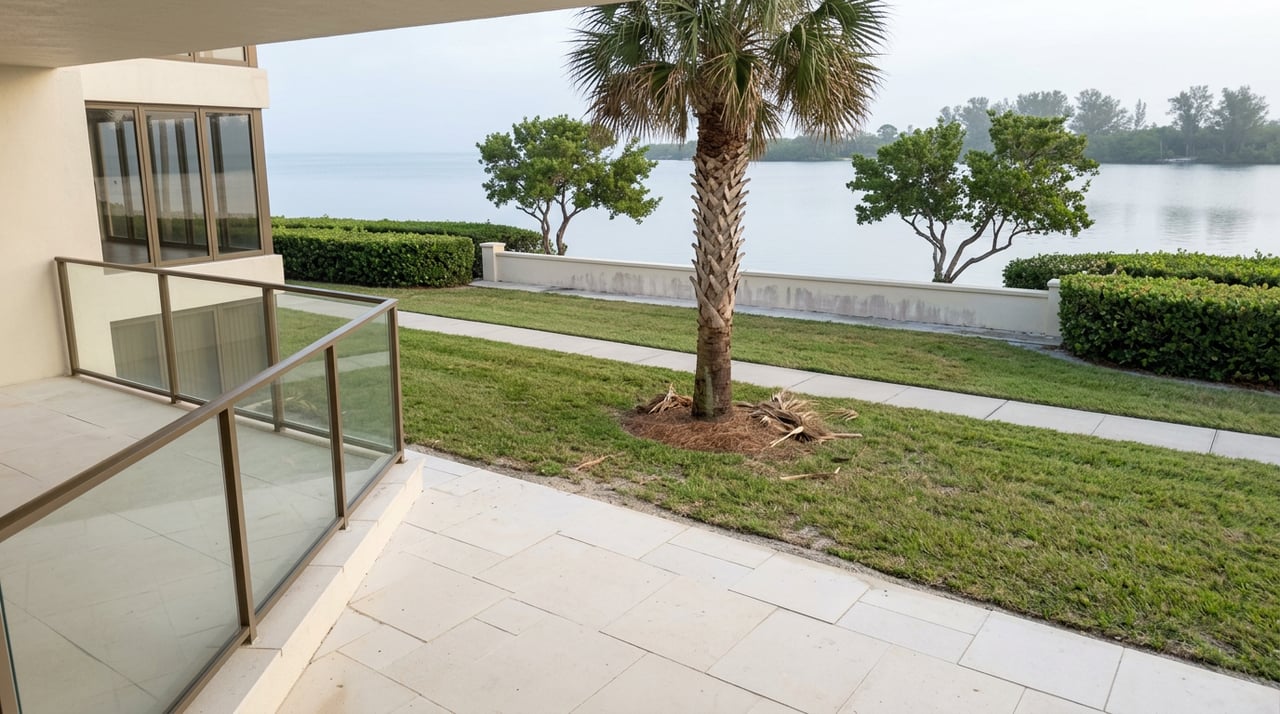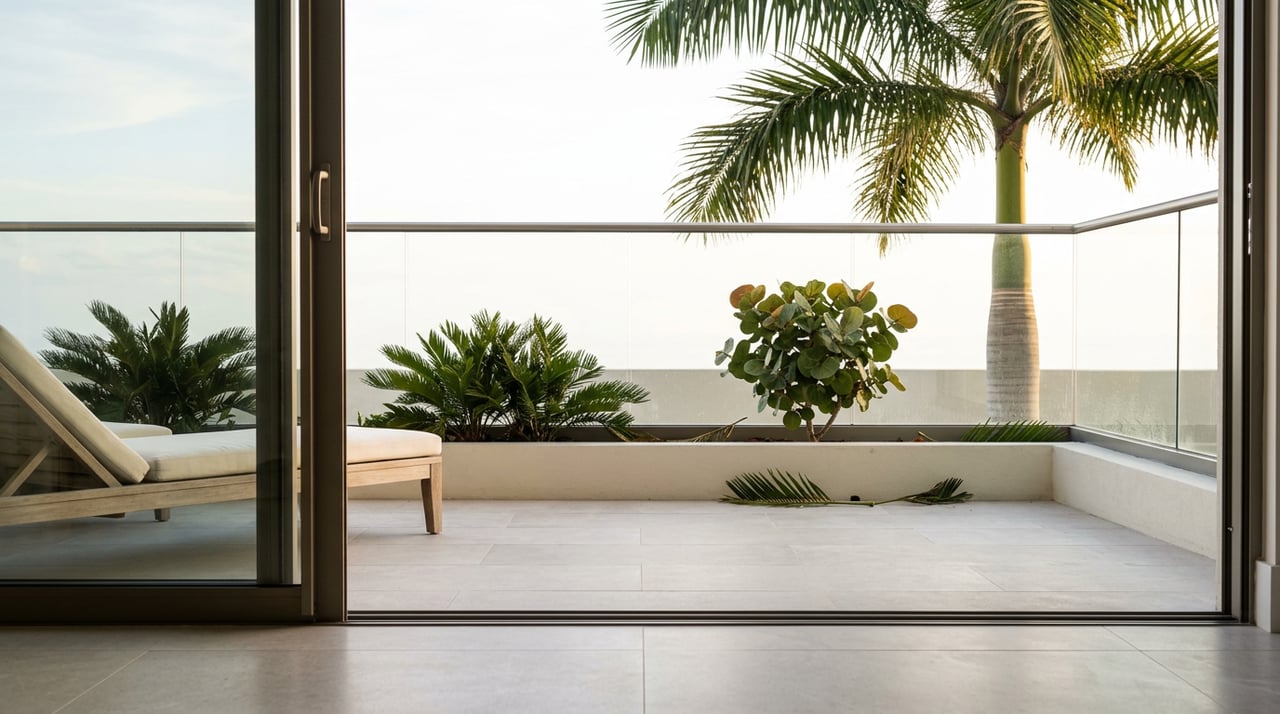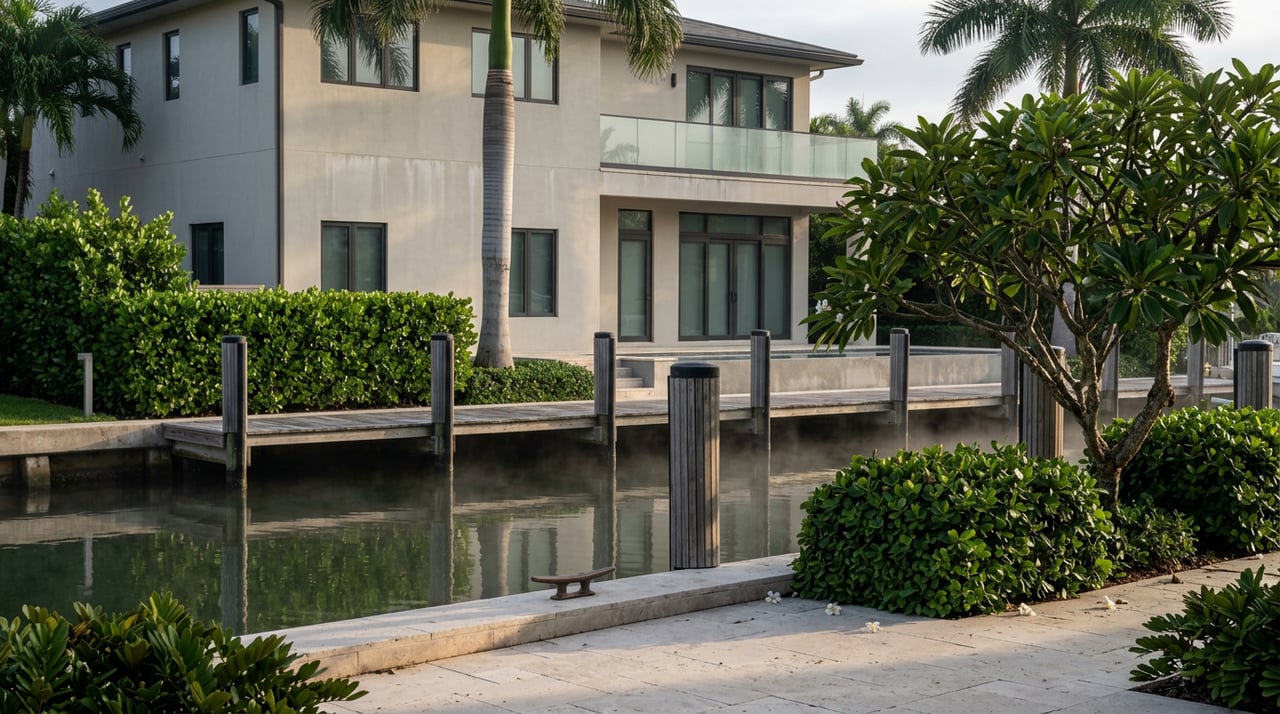
The cranes came down at Fisher Island's last construction site in early August, marking the final visible step before the island's last new tower opens. On the island's north shore, a different kind of construction was just getting started: a legal one, over the north-shore fuel-terminal site, and nobody involved, not the county, not the developer, not the residents, agrees on what should happen to it.
Both stories are unfolding on the same 216 acres, and they are connected in a way that matters more to the people who already live here than either headline suggests on its own. Since the Fisher Island Club opened in 1987, Club-operated venues have been part of island life, including the Beach Club. The land itself and the food on it have both become subjects of change.
The Last Residential Tower
The Residences at Six Fisher Island sits on the island's final 6.5-acre oceanfront site, the last stretch of ground zoned for a large residential building on an island that has none left after this one. Related Group is developing the 10-story tower with BH Group, Teddy Sagi and Wanxiang America RE Group, with architecture by Kobi Karp and interiors by Tara Bernerd and Partners. The tower cranes were dismantled and removed from the site earlier this month as work moves into pool construction and amenity finishes, with completion expected late this year or into 2027, according to reporting from PROFILEmiami.
That milestone is worth pausing on for a reason that has nothing to do with square footage. As Six Fisher Island closes out, the fight over the north-shore fuel-terminal site, on the opposite shore, continues.
A Fight Over the North Shore Fuel Terminal
As the Miami New Times reported, that other parcel is the marine fuel terminal that has sat on Fisher Island's north shore for close to a century, supplying fuel to cruise and cargo ships at PortMiami. Its previous operator put the roughly 10-acre site up for sale, and a deal to sell it to the Chicago-based developer HRP for $180 million was announced in January 2025 and closed that fall. HRP's original plan was straightforward: demolish the tanks, remediate the land, and build two 13-story condominium towers. Residents who had spent decades looking at an active fuel farm from their beach welcomed it.
Then Miami-Dade County got involved, because the depot is the only marine terminal in the region capable of supplying fuel to PortMiami's ships, a facility the county has called a public necessity for the port's cruise and cargo operations. County officials spent roughly eight months negotiating with HRP, and by May 2026 the two sides had reportedly reached an agreement in principle: the county would pay HRP $200 million upfront and another $200 million over 20 years, preserving the fuel depot rather than letting it become condos.
The deal fell apart almost as soon as it reached Mayor Daniella Levine Cava's desk. During a late review, Deputy Mayor Roy Coley identified a 1978 county covenant on part of the property restricting its use to fuel-related operations, a restriction that would require a two-thirds vote of the county commission to remove. Levine Cava called the price too high and ended negotiations on June 5. Eleven days later, the county commission voted to pursue the site through eminent domain, with Commissioner Raquel Regalado casting the lone dissenting vote and warning she doubted the county would end up paying a fair price for what it gets.
What makes this more than a government-versus-developer story is that Fisher Island's own residents are suing too, and not on the side you'd expect. The Fisher Island Community Association and Fisher Island Club filed suit on May 28, arguing that HRP's original agreement with the community obligated it to pursue residential redevelopment of the site, not sell it to the county for continued use as a fuel facility. As the Miami New Times reported, FICA chairman James Ferraro called two of HRP's partners, Patrick Dovigi and Russell Galbut, "flippers" who were "just out to make a buck" on a quick sale rather than following through on the towers residents were promised.
So the fight isn't residents against government. It's residents suing to force a private outcome, condos instead of a public buyout, while the county pursues a legal process that could override what either the residents or HRP wants. Attorney Jason Brooks, who is not involved in the litigation, told The Real Deal that if the county wins its eminent domain case it may end up paying substantially more than the $400 million deal it just walked away from, and that the appraisal dispute alone could drag on for years. The Real Deal quoted HRP's Roberto Perez as saying that the county's own decades of underinvestment in port infrastructure created this mess in the first place, adding that "seizing private property is not the solution for public failure." (The Real Deal)
The practical takeaway for anyone living on the island right now: don't expect the tanks on the north shore to disappear this year, or possibly for several more, no matter which side's press release you read next.
Dining Changes on Fisher Island
A separate change in the island's dining scene had begun before the fuel depot fight made headlines. For 36 years, every restaurant on the island operated under the Club itself: the Beach Club's seaside pavilions, La Trattoria on the Main Marina, Greenside overlooking the golf course, and the Vanderbilt Mansion's Theapolis and Mansion Library, plus the equity-members-only Snooker Club tucked into what were literally William K. Vanderbilt II's own bedrooms.
That arrangement changed in 2024, when Pura Vida became the first outside restaurant operator ever to open on Fisher Island, taking over the Racquet Club space with its wellness-driven menu of bowls, cold-pressed juices and all-day breakfast. Cofounder Omer Horev told Miami New Times that residents themselves had asked for it, saying members "reached out" wanting something different after decades of eating exclusively at Club-run venues. Since then, Lola's has joined the island's dining lineup as a European brasserie-style concept on the Main Marina, another sign that dining options are changing as a separate dispute over development moves through court.
Neither shift is dramatic on its own. Together, they describe changes in the island's development debate and dining options.
What to Watch This Fall
For residents tracking both threads, a few dates and signals matter more than the headlines:
- The circuit court calendar on FICA's lawsuit against HRP, and any parallel movement on the county's eminent domain filing, which requires a 30-day written offer to the property owner before the clock legally starts.
- Progress on Six Fisher Island's pool decks and amenity floors, the phase construction has moved into now that the cranes are gone, ahead of the late 2026 or 2027 completion window developers have cited.
- Whether additional outside food and beverage operators follow Pura Vida and Lola's onto the island, or whether the Club pulls dining back in-house after testing the outside model.
- Ferry and marine traffic patterns around the north shore terminal, which TransMontaigne is contracted to keep operating through 2027 regardless of how the legal fight resolves.
None of this changes what makes Fisher Island Fisher Island. It does mean that questions about development and dining are drawing attention.
For residents and prospective owners who want context on how these two threads, construction and dining, are shaping the island's next chapter, The Cofresi Group tracks Fisher Island's branded residences and marina-front listings closely, alongside the rest of Miami's most exclusive addresses. Reach out to receive exclusive listings as they come available.
This article is general information, not legal, tax or financial advice. Consult a qualified professional about your situation.